
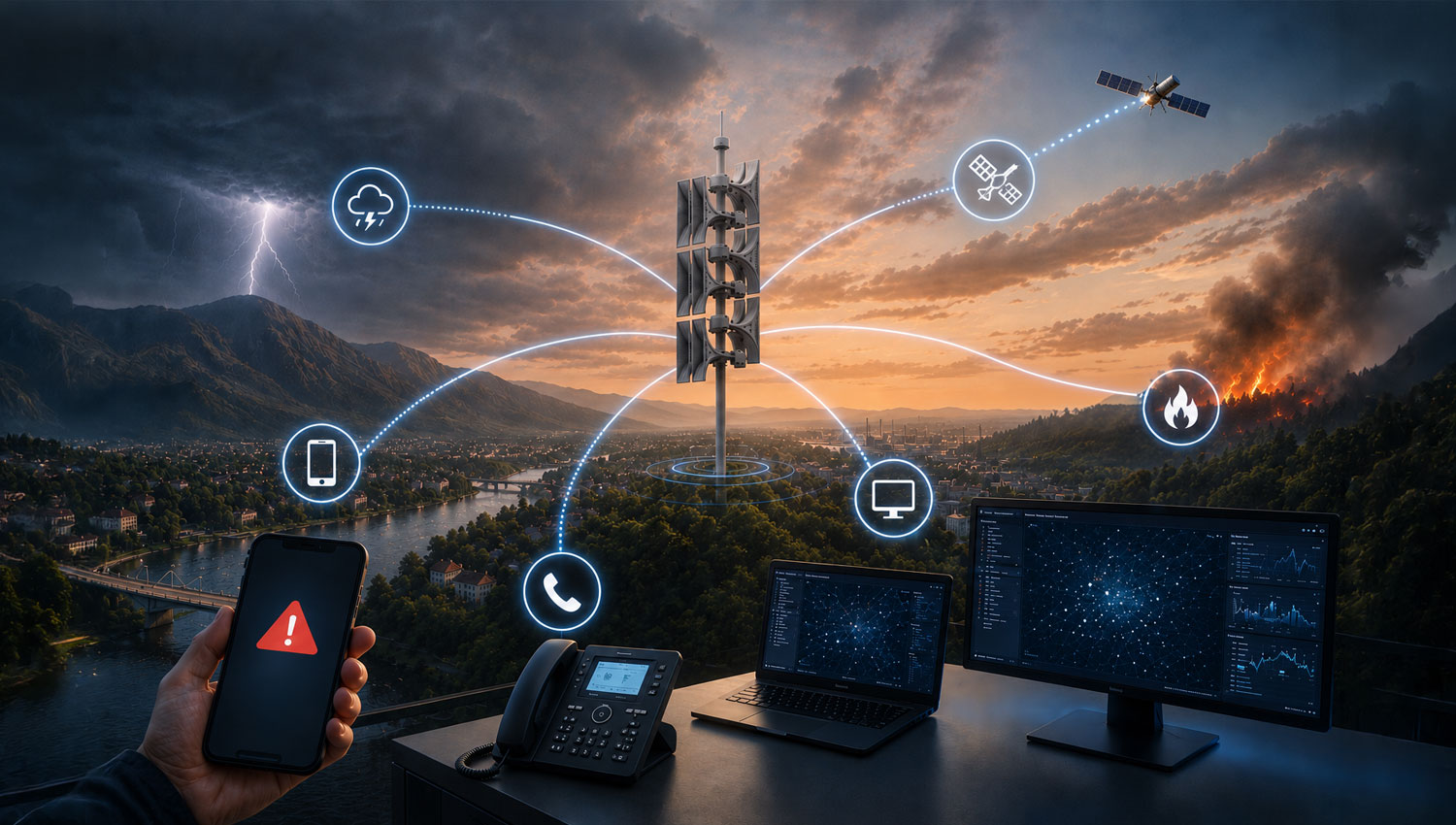
The way countries protect their citizens during emergencies is changing. As new threats emerge and technology evolves, governments around the world are modernizing their public warning systems to improve resilience and emergency response in the 21st century.
Modernizing a nationwide siren network is no longer just about replacing ageing infrastructure. It is about building a more resilient public warning system capable of responding to natural disasters, cyber incidents, industrial accidents, military threats, and other complex emergencies.
From Traditional Sirens to Smart Warning Systems
Many existing national siren networks were built decades ago. While these emergency siren networks have proven reliable, maintaining ageing analogue infrastructure is becoming increasingly expensive, and older systems often lack the flexibility required for modern emergency management.
At the same time, governments are introducing technologies such as Cell Broadcast and mobile alerting platforms, allowing authorities to send detailed emergency information directly to smartphones. These systems significantly improve communication, but they are only one part of the solution.
Why One Communication Channel Is Not Enough
Real-world experience has shown that mobile alerts should not become the only public warning system. Smartphones depend on telecommunications infrastructure that can be affected by power outages, cyberattacks, network congestion, or physical damage. Phones may also be switched off, out of battery, or simply not nearby when an emergency occurs.
For rapidly developing situations, outdoor warning systems remain essential because they immediately capture attention and continue operating independently of mobile networks. Once people are alerted, mobile notifications can provide detailed instructions and updates.
This is why emergency management experts increasingly recommend an integrated warning system that combines multiple communication technologies capable of delivering reliable nationwide alerts and warnings, even when one communication channel becomes unavailable.
Responding to Today’s Security Challenges
The need to modernize a warning system is no longer driven only by ageing infrastructure. Climate change, increasingly frequent floods, storms, wildfires, industrial accidents, cyber threats, and geopolitical tensions are forcing governments to rethink how they protect their populations.
Modern public warning systems must be able to respond to a wide range of emergencies while supporting coordination between emergency services, authorities, and critical infrastructure operators. Increasingly, governments are also exploring technologies that can detect military threats while supporting civilian emergency response through an integrated civil-military warning network.
The Future of Public Warning
The future of emergency communication lies in integration. Rather than relying on individual technologies, modern warning platforms combine outdoor sirens, mobile alerts, weather monitoring, sensor networks, emergency operation centers, and intelligent control systems into a single coordinated solution. As countries continue updating their national public alerting policy, the focus is shifting from individual technologies toward resilient ecosystems capable of operating under virtually any circumstances.
Modernizing a public warning system is far more than replacing old sirens with new technology. It is about creating a resilient infrastructure capable of delivering reliable nationwide alerts and warnings through multiple communication channels – regardless of the type of emergency.
As one of the world’s leading manufacturers of electronic sirens and integrated public warning systems, Telegrafia has spent more than a decade delivering comprehensive national warning solutions to customers around the world. Our systems go far beyond outdoor sirens, integrating emergency operation centers, mobile alerting, voice broadcasting, weather and sensor data, remote monitoring, and intelligent control technologies into a single integrated warning system. Designed to support everything from natural disasters and industrial accidents to civil protection and national security, these solutions help authorities respond faster, coordinate more effectively, and ultimately protect more lives.

The article was written by
Róbert Jakab
Robert is like a moving photograph – because he is like a video. He can capture 60 frames per second. Whenever something happens, he records it. Currently, he’s working on smaller videos and hoping to make a feature film one day and then its sequel. Telegrafia 2: Monkey Power