

Listen to audio:
From tsunamis to Chernobyl, history repeatedly shows the same pattern: people often die not because there is no escape, but because the warning comes too late.
Natural disasters, industrial accidents, toxic leaks, floods, and wildfires can escalate within minutes. In many of the world’s deadliest catastrophes, investigations later revealed a painful truth – thousands of lives might have been saved if people had received a clear and immediate warning.
Modern electronic sirens and public warning systems exist precisely for these moments. They help authorities alert entire communities in seconds, even when power, internet, or mobile networks fail.
Here are some of the most devastating disasters in history where early warning systems could have significantly changed the outcome.
The Indian Ocean Tsunami (2004): A Disaster Without Warning
On December 26, 2004, a massive undersea earthquake near Sumatra triggered one of the deadliest tsunamis ever recorded.
Waves reaching heights of over 30 meters struck coastlines across Indonesia, Sri Lanka, Thailand, India, and several other countries. More than 230,000 people lost their lives.
One of the most tragic facts about the disaster was that many coastal regions had no tsunami warning system at all. In some locations, there were more than 30 minutes between the earthquake and the arrival of the waves – enough time for evacuation if a functioning warning network had existed.
Many people even walked toward the suddenly receding ocean out of curiosity, unaware that it was a sign of an approaching tsunami.
After the catastrophe, countries across the Indian Ocean invested heavily in tsunami detection systems, emergency communication infrastructure, and electronic siren networks.

Chernobyl (1986): The Danger of Delayed Information
The Chernobyl nuclear disaster remains one of the most infamous technological catastrophes in history.
When Reactor No. 4 exploded on April 26, 1986, massive amounts of radioactive material were released into the atmosphere. Yet residents of nearby Pripyat were not immediately informed about the danger.
People continued normal daily activities for hours while radiation levels rose around them. Children played outside. Public events continued. The evacuation of Pripyat only began roughly 36 hours after the explosion.
Chernobyl is not primarily remembered as a failure of sirens – it is remembered as a failure of communication.
Authorities delayed public warnings, withheld critical information, and failed to provide immediate instructions to civilians. Modern emergency warning systems are designed to prevent exactly this type of scenario. Today, integrated public warning systems can automatically distribute alerts through electronic sirens, radio broadcasts, SMS notifications, and voice announcements within seconds.
In nuclear incidents, every minute matters.
The Nevado del Ruiz Volcano (1985): Warnings That Never Reached People
In Colombia, the eruption of the Nevado del Ruiz volcano triggered a deadly lahar – a fast-moving flow of volcanic mud and debris.
The town of Armero was buried almost entirely. Approximately 23,000 people died.
What makes this disaster particularly tragic is that scientists had already warned about the volcanic risk weeks before the eruption. Hazard maps existed. Experts knew that lahars were possible.
But communication failures, delayed decisions, and the absence of an effective public warning system meant many residents never received urgent evacuation instructions in time.
Today, volcanic monitoring systems are often directly connected to emergency sirens and automated evacuation alerts specifically because of lessons learned from tragedies like Armero.
Bhopal (1984): The World’s Deadliest Industrial Gas Leak
Shortly after midnight on December 3, 1984, toxic methyl isocyanate gas leaked from a pesticide plant in Bhopal, India.
Thousands of people died within hours. Hundreds of thousands suffered long-term health consequences.
Reports and investigations later revealed serious failures in safety systems and emergency preparedness. Alarm systems inside the facility were reportedly insufficient, while surrounding communities received little or no effective warning.
Most residents were asleep when the gas spread through densely populated neighborhoods.
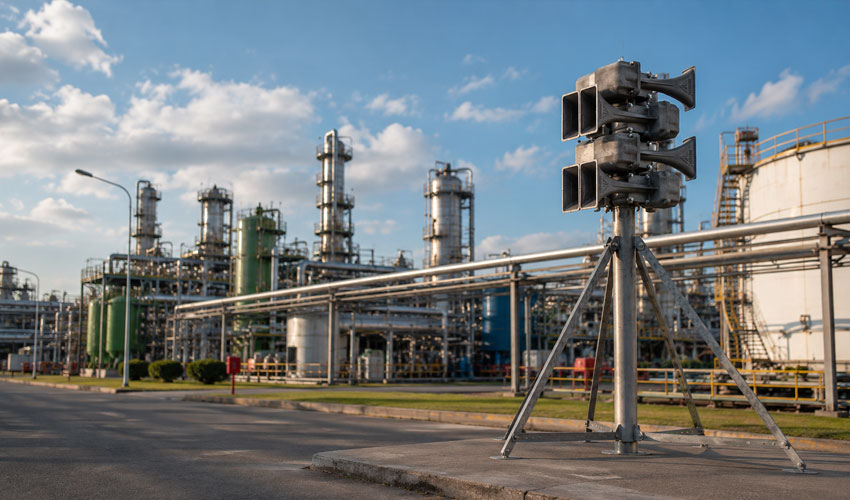
Industrial warning systems today are built to avoid exactly these situations. Modern chemical plants increasingly rely on automated electronic sirens, voice evacuation systems, and real-time emergency notifications that can instantly warn workers and nearby residents about toxic releases.
Lahaina Wildfires (2023): Modern Technology, Missing Alerts
The devastating wildfires in Lahaina, Hawaii, became one of the deadliest wildfire disasters in modern U.S. history.
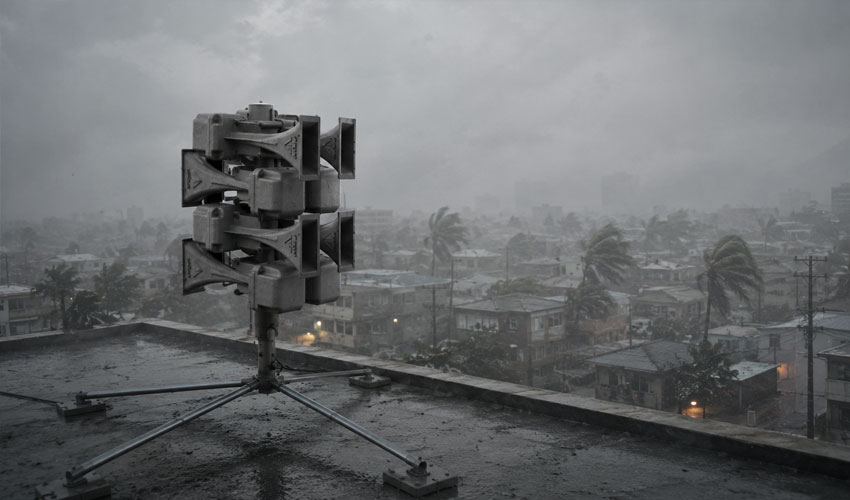
After the fires, major criticism focused on the lack of activated public sirens. Many residents reportedly received little warning as fast-moving flames cut off evacuation routes.
The tragedy highlighted a critical reality of modern emergency management: having technology available is not enough if warning systems are not properly integrated into emergency response procedures.
Wildfires spread faster today due to droughts, high winds, and climate-related extreme weather. Communities increasingly need warning systems capable of reaching people immediately – day or night.
Why Electronic Sirens Still Matter
Some people assume smartphones alone are enough for emergency alerts. Real disasters prove otherwise.
Mobile networks can fail. Internet access may disappear. Notifications can be muted, ignored, or delayed.
Electronic sirens remain one of the fastest and most reliable ways to warn entire populations simultaneously. Modern systems can broadcast voice messages, activate automatically from monitoring centers, and integrate with weather services, industrial sensors, flood monitoring systems, or civil protection infrastructure.
They are designed for the exact moments when conventional communication stops working.
Lessons History Already Taught Us
The world has repeatedly witnessed disasters where the absence of fast, reliable public warning systems increased the number of victims.
Chernobyl showed the dangers of delayed information.
The Indian Ocean tsunami exposed the consequences of having no warning infrastructure at all.
Bhopal demonstrated the catastrophic impact of failed industrial alerts.
Lahaina revealed that even modern societies remain vulnerable when emergency communication breaks down.
The technology to reduce these risks already exists.
At Telegrafia, we develop tailored electronic siren and public warning solutions for municipalities, industry, civil protection, critical infrastructure, and emergency management. Modern warning systems help authorities react faster, inform people immediately, and improve evacuation response during critical situations where every second matters.

The article was written by
Róbert Jakab
Robert is like a moving photograph – because he is like a video. He can capture 60 frames per second. Whenever something happens, he records it. Currently, he’s working on smaller videos and hoping to make a feature film one day and then its sequel. Telegrafia 2: Monkey Power