

Listen to audio:
Mining remains one of the most challenging industrial sectors, where safety depends on speed, communication, and reliability. Despite technological progress, serious incidents continue to occur worldwide.
Over the past decade, multiple mining disasters have shown that early warning systems in mining are essential for protecting lives and improving emergency response in critical situations.
Major Mining Disasters And Their Impact
Several incidents between 2016 and 2026 demonstrate how quickly mining hazards can escalate.
In May 2017, an explosion at the Zemestan-Yurt coal mine in Iran killed at least 43 miners. The blast was caused by methane gas during maintenance work, and reports indicated that workers were not warned in time.
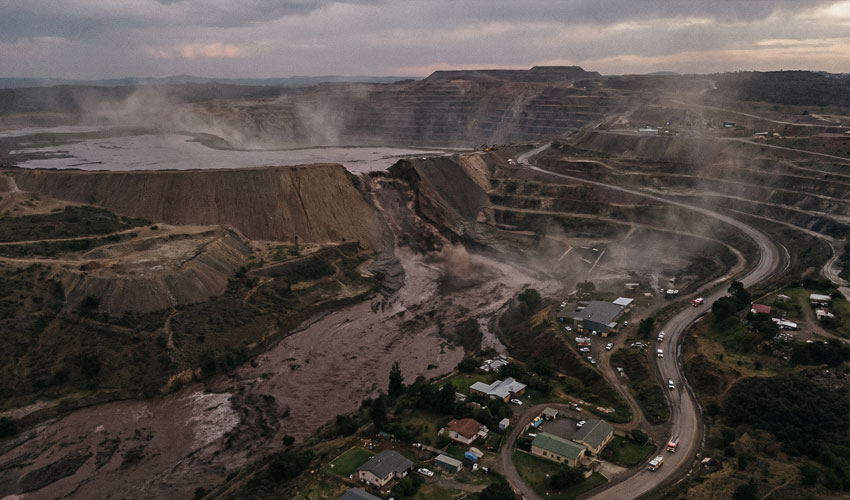
In January 2019, the Brumadinho disaster in Brazil resulted in more than 270 fatalities after a tailings dam collapsed. The sudden nature of the event left almost no time for evacuation.
In December 2019, a coal mine explosion near Karviná in the Czech Republic killed 13 miners. Investigations pointed to delayed detection and insufficient warning.
Between 2020 and 2022, China experienced several incidents involving fires, gas leaks, and flooding. In many cases, hazardous conditions developed rapidly, and warning systems were not fast enough to ensure safe evacuation.
In February 2022, an explosion at a gold mining site in Burkina Faso killed around 60 people. The lack of structured safety systems and effective warning significantly increased the number of casualties.
Mining accidents have continued in recent years, confirming that detection alone is not enough — warning must be immediate and reliable.

The Deadliest Mining Disaster In History
The Benxihu Colliery disaster in China in 1942 remains the deadliest mining accident ever recorded, with more than 1,500 fatalities.
A key factor that increased the severity of the tragedy was the absence of effective warning. Many workers were not alerted in time and were unable to evacuate.
This event remains a powerful reminder of the importance of early warning systems in mining, especially in confined underground environments.
Common Causes Of Mining Disasters
Across different regions, mining disasters share similar causes:
- gas leaks and explosions
- fires and toxic gases
- flooding
- structural collapses
These hazards often develop rapidly. While risks may be known, the immediate danger is not always communicated effectively.
The main challenge is not only detecting a threat, but ensuring that early warning systems in mining can communicate it instantly and clearly.
Why Early Warning Systems In Mining Are Critical
Underground mining environments are difficult for communication due to noise, dust, and limited visibility.
Traditional warning methods are often unreliable in emergencies. This is why early warning systems in mining are essential — they provide a clear signal that reaches all workers instantly and enables fast evacuation.
When connected to monitoring technologies, these systems can trigger alerts automatically, ensuring rapid response and minimal delays.
Improving Mining Safety With Modern Early Warning Systems
Modern early warning systems in mining combine monitoring, communication, and alerting into one integrated solution.
They can:
- operate in harsh environments
- deliver clear alerts over long distances
- function during power outages
- integrate with automated systems
By improving response time and coordination, these systems play a key role in enhancing mining safety.
From Lessons Learned To Practical Solutions
The mining disasters of the last decade show that safety depends on speed. Early warning systems must be able to react instantly and reach every part of the operation without delay.
Modern solutions combine monitoring, communication, and alerting into one integrated system, ensuring that warnings are delivered clearly and immediately when a risk is detected.
Telegrafia develops electronic siren solutions designed for critical environments such as mines. These systems are built for reliability and can be integrated with automated monitoring technologies to provide fast and effective warning, even in demanding conditions.
Conclusion: time is the most valuable factor underground
Every major mining disaster shows the same reality. The incident itself is often sudden, but the outcome depends on how quickly people are warned.
Faster warning leads to faster evacuation. And in mining, that difference is critical.

The article was written by
Róbert Jakab
Robert is like a moving photograph – because he is like a video. He can capture 60 frames per second. Whenever something happens, he records it. Currently, he’s working on smaller videos and hoping to make a feature film one day and then its sequel. Telegrafia 2: Monkey Power