
Listen to audio:
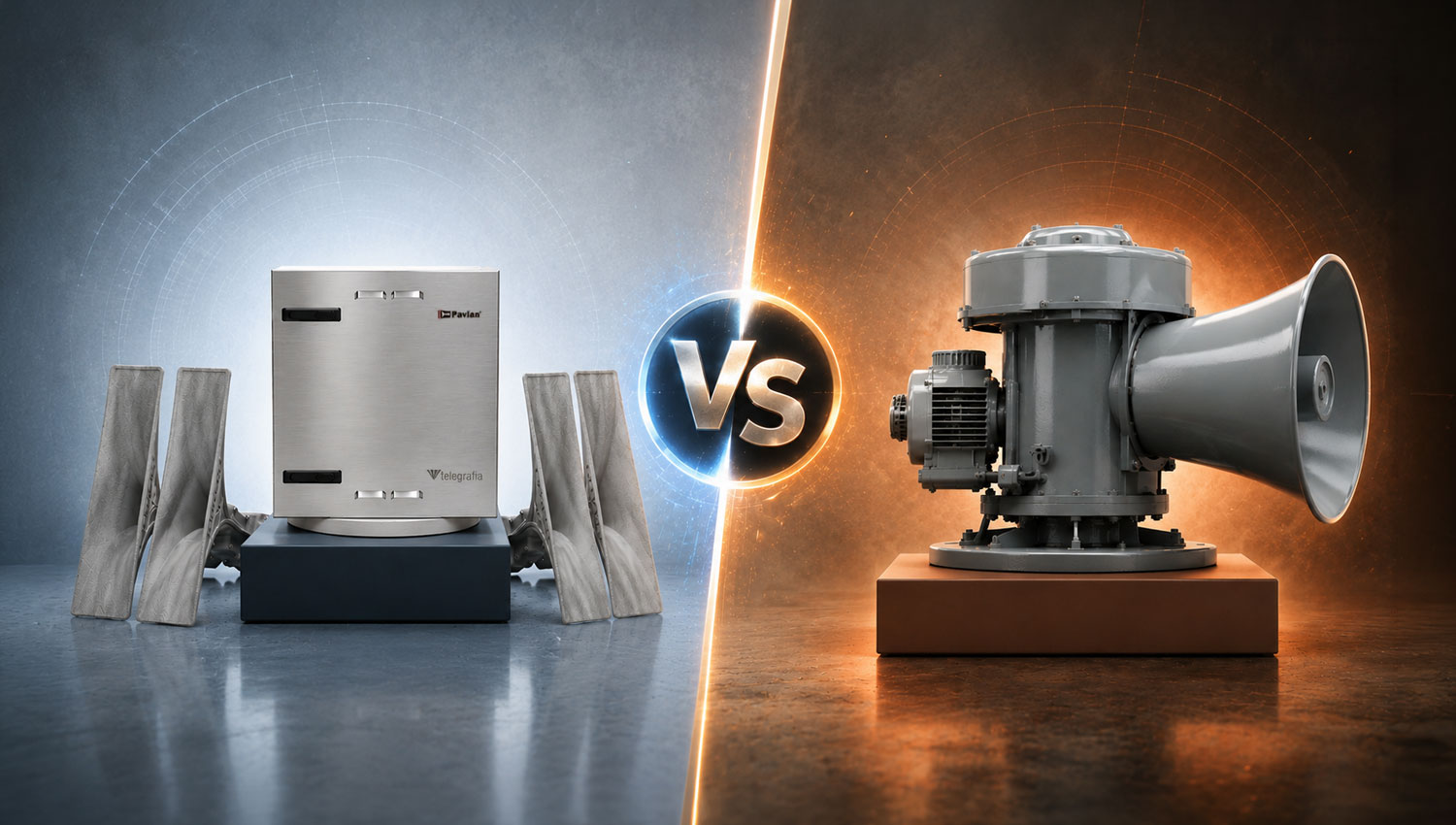
When comparing electronic sirens vs motor-driven sirens, it is important to understand that modern public warning requires much more than simply generating a warning sound. Traditional motor-driven sirens have been a fundamental part of public warning systems for decades. Their role was simple – to generate an acoustic signal that alerts residents to an emergency situation.
Today, however, a warning signal alone is often not enough. Once the siren sounds, people need to know what type of danger they are facing, what risks it presents, and what actions they should take.
This is where the capabilities of modern electronic sirens become evident when compared to traditional motor-driven solutions, which can provide a warning but cannot deliver additional information. In addition to a warning tone, a modern electronic siren can instantly broadcast voice messages with specific instructions for the public.
Instead of hearing an unclear signal, people can receive a clear message such as:
“Chemical leak hazard. Remain indoors and close all windows.”
This is not merely a technological advancement. While one system can alert people to danger, the other can simultaneously inform and guide the public throughout an emergency situation.
A more detailed explanation of how electronic sirens work can be found in the article about the operating principle of electronic sirens:
https://www.electronic-sirens.com/electronic-sirens-how-they-work-for-public-warning/
Electronic Sirens vs Motor-Driven Sirens: Key Differences
A practical comparison of both solutions best illustrates their capabilities in real-world deployment.
| Area | Electronic Siren | Motor-Driven Siren |
|---|---|---|
| Type of Output | Sound and voice | Sound only |
| Public Information | Precise instructions and information | Unspecified signal |
| Control | Local, remote, centralized, or automated | Local |
| Flexibility | High | Low |
| System Integration | Yes | Minimal or none |
| Siren Testing | Loud and silent testing | Loud testing only |
| Diagnostics and Monitoring | Continuous system status monitoring | Limited inspection capabilities |
| Response to Events | Ability to immediately broadcast instructions | Warning signal only |
What matters is not only how a siren generates sound, but also what information it can communicate and how effectively it supports emergency management.
Why Cities Are Modernizing Old Sirens
Many motor-driven sirens are still operational. However, this does not automatically mean they meet today’s public warning requirements.
Modern emergency management requires:
- fast communication,
- remote control,
- automation,
- and integration with other systems.
This is why cities and municipalities are increasingly transitioning to electronic solutions.
Modern electronic sirens can be integrated with:
- meteorological systems,
- flood warning solutions,
- industrial safety systems,
- sensors,
- or emergency management centers.
This enables faster, more accurate responses with significantly less room for error.
We covered this topic in more detail in our article about replacing old motor-driven sirens with modern electronic solutions:
https://www.electronic-sirens.com/replace-old-motor-driven-sirens-new-modern-electronic-sirens/

The Psychology of Warning Is Just as Important as Technology
The impact of different types of sirens is not limited to technical aspects. The psychology of warning also plays an important role.
An unclear warning signal naturally creates stress and uncertainty. People begin searching for information, calling others, or waiting to see how others react. Voice messages, however, significantly change public response. When people receive clear instructions, they react more calmly and effectively. This is one of the reasons why modern warning systems are now designed as communication tools rather than merely sound-generating devices.
Electronic sirens no longer function as standalone devices. They have gradually become part of broader safety systems that connect multiple information sources and enable rapid responses to emerging incidents.
This significantly increases the reliability of the entire system and reduces response times during emergencies.
Modernization Is Not a Trend. It Is a Response to Reality.
Today, the difference between a motor-driven siren and an electronic siren is not only in the method of sound generation. The key difference lies in whether the system can merely issue a warning or also effectively inform the public and guide their response.
And that is precisely why electronic sirens are gradually becoming the new standard in modern public warning.
Telegrafia has long been dedicated to the development of modern warning and notification systems, including electronic sirens for cities, municipalities, and industrial facilities.
If you are considering modernizing your warning system, we will be happy to help you design a solution tailored to your specific risks, environment, and operational requirements.

The article was written by
Tomáš Marčák
Tomáš combines an engineering mindset with a passion for innovation, business, and effective communication. At Telegrafia, he contributes to projects that transform technology into practical solutions, helping make communities safer and better informed. Outside of work, he enjoys travelling, sports, and exploring new cultures. Driven by curiosity and continuous learning, he is always seeking new challenges, experiences, and opportunities for personal and professional growth.
.