
Listen to audio:
When an earthquake warning siren sounds, there may be only seconds to react. Knowing the signal and knowing exactly what to do can therefore be just as important as the warning technology itself.
This is why earthquake preparedness is deeply embedded in everyday life in some high-risk countries. In Mexico, for example, schoolchildren have been learning to recognize earthquake warning signals and practicing earthquake drills for more than 25 years. Chile also regularly conducts earthquake drills across schools and other educational institutions. The goal is simple: when a real warning comes, people should react automatically rather than waste valuable time deciding what to do.
How to React When an Earthquake Warning Sounds
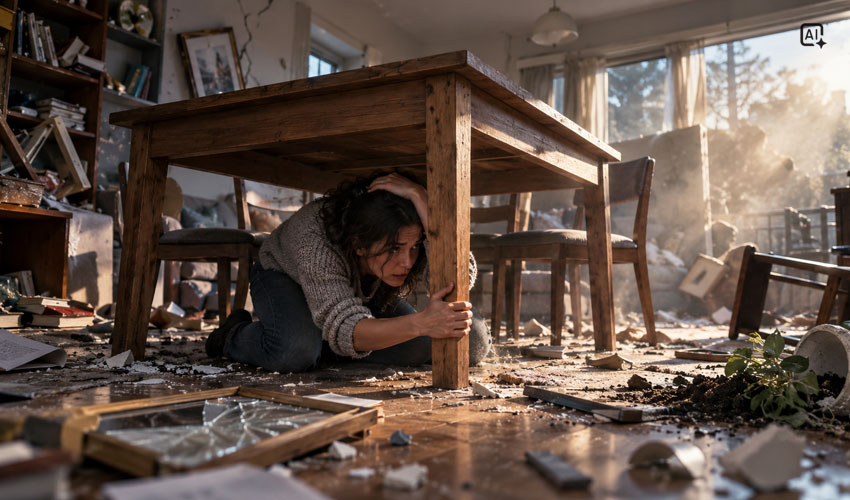
If you are indoors, the generally recommended action is Drop, Cover, and Hold On. Get down, take cover under a sturdy table or desk if possible, protect your head and neck, and hold on until the shaking stops.
Do not immediately run outside. Falling glass, façade elements and other debris can make areas close to buildings particularly dangerous during shaking. Doorways are also no longer considered a generally safer place in modern buildings, and the so-called “triangle of life” is not recommended by major earthquake-safety organizations.
An emergency bag with water, a flashlight, first-aid supplies and other essentials should be prepared in advance and kept somewhere easily accessible. However, the first seconds after an earthquake alert should be used for immediate protection. The emergency kit becomes useful once the shaking has stopped and evacuation or further emergency action is required.
How Much Warning Time Can an Earthquake Early Warning System Provide?
There is no universal “one-minute warning”.
The available time depends mainly on where the earthquake begins, where the person receiving the warning is located, and how quickly the detection and warning system reacts. In many earthquake early warning systems, the available lead time is a few seconds to several tens of seconds. Locations close to the epicenter may receive very little or even no advance warning.
Mexico City is a well-known example where longer warning times can sometimes be achieved. For earthquakes originating in parts of the Guerrero coast, the geographical distance can provide approximately 60 seconds of warning before stronger seismic waves reach the city. This is a specific geographical advantage, however, and should not be presented as a standard warning time for every earthquake or every country.
Even ten or twenty seconds can be valuable when people have been trained to respond immediately.
What to Do After the Shaking Stops
Once the shaking stops, people should remain alert for possible aftershocks and follow instructions from local authorities or emergency services. If evacuation is necessary, this is the time to take the prepared emergency bag and move carefully to a designated safe area. Electronic sirens and voice messages can continue to play an important role at this stage by providing updated instructions, evacuation information or further warnings.
Why Electronic Sirens Are Important During Earthquakes
Earthquakes can disrupt exactly the infrastructure normally used to communicate with the public. Power can fail, telecommunications infrastructure can be damaged, and mobile networks may become congested as large numbers of people try to communicate at the same time. Federal Emergency Management Agency, the U.S. federal agency responsible for disaster preparedness and emergency management, notes that disasters can cause both physical communication failures and network overload.
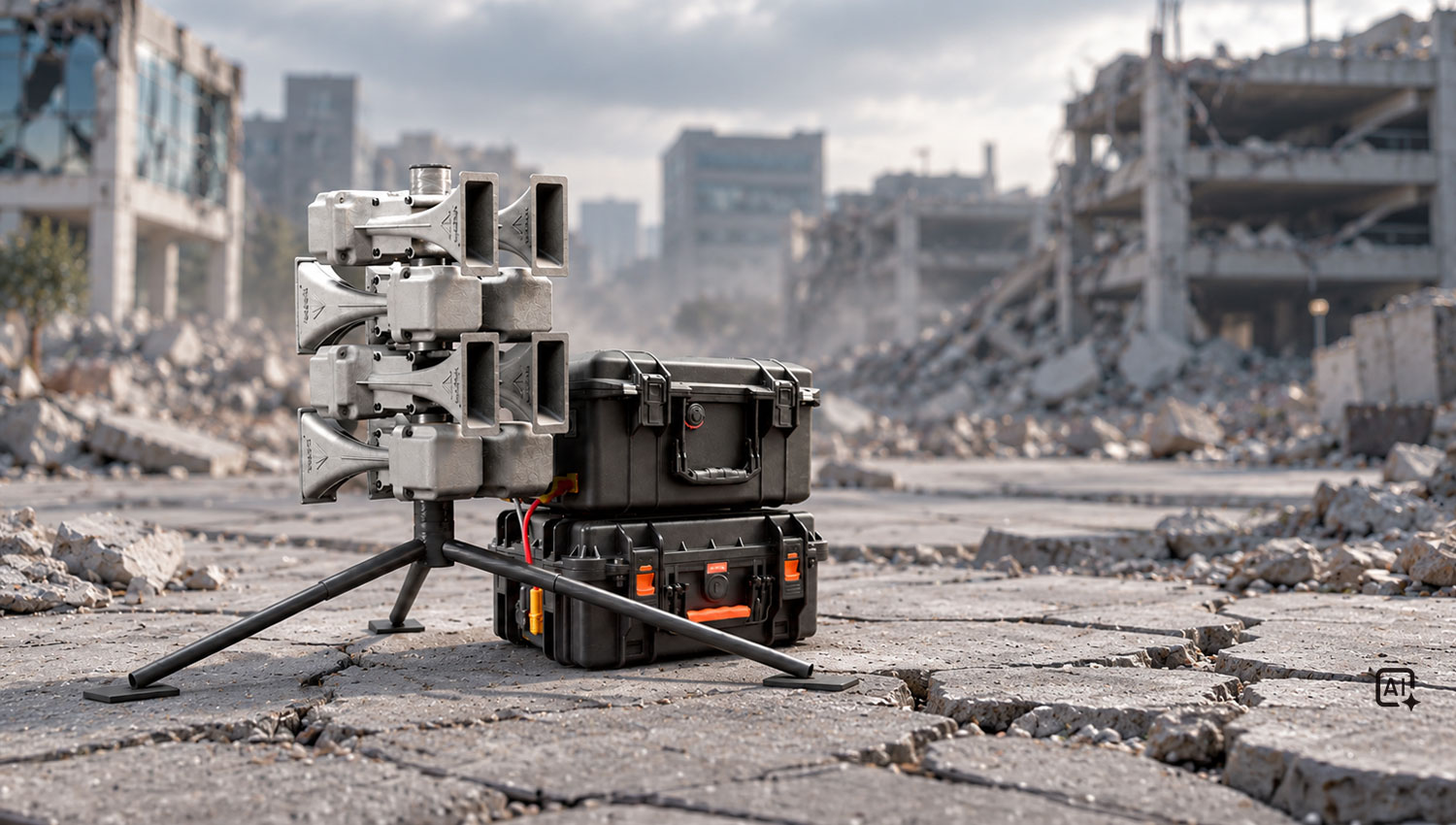
This is where electronic sirens provide an important additional warning channel. They can cover large outdoor areas immediately and do not require every person to have a charged phone, mobile signal or an active application. Telegrafia‘s earthquake warning solutions can automatically activate electronic sirens when dangerous seismic activity is detected. The system can also operate with backup power and communication infrastructure independent of common commercial infrastructure.
Electronic sirens also provide more than a warning tone. Once the immediate danger has passed, voice messages, pre-recorded announcements or live instructions can tell people what to do next and support the coordination of emergency response.
That combination of immediate activation, wide outdoor coverage, backup power, independent communications and clear voice instructions makes electronic sirens a particularly valuable part of an earthquake warning system.
Technology can provide the warning. But preparedness determines how effectively people use those valuable seconds.
FAQ
1. Can earthquake warning sirens be activated automatically
Yes. Telegrafia electronic sirens can be connected to monitoring systems and automatically activated when predefined emergency conditions are detected. This helps reduce delays between threat detection and public warning.
2. Can electronic sirens broadcast instructions after the warning signal?
Telegrafia electronic sirens can broadcast pre-recorded messages as well as live voice announcements. This allows authorities to provide additional instructions after the initial warning, for example about evacuation or further safety measures.
3. Can different warning signals or multilingual messages be used?
Yes. Telegrafia sirens can reproduce standard civil protection warning signals as well as custom warning tones. They also support multilingual pre-recorded and live voice announcements.
4. Can the warning system operate during a power or communication failure?
Sure. Telegrafia electronic sirens can operate using backup batteries during power outages. If communication with the control center is lost, the siren can also operate autonomously or respond to predefined local or external triggers, depending on the system configuration.
5. How is siren coverage planned for an earthquake warning system?
Siren placement and required acoustic performance depend on terrain, buildings, background noise and the size of the protected area. Telegrafia uses Acusticus Professional to create acoustic coverage studies and determine suitable siren locations before installation.

The article was written by
Róbert Jakab
Robert is like a moving photograph – because he is like a video. He can capture 60 frames per second. Whenever something happens, he records it. Currently, he’s working on smaller videos and hoping to make a feature film one day and then its sequel. Telegrafia 2: Monkey Power