
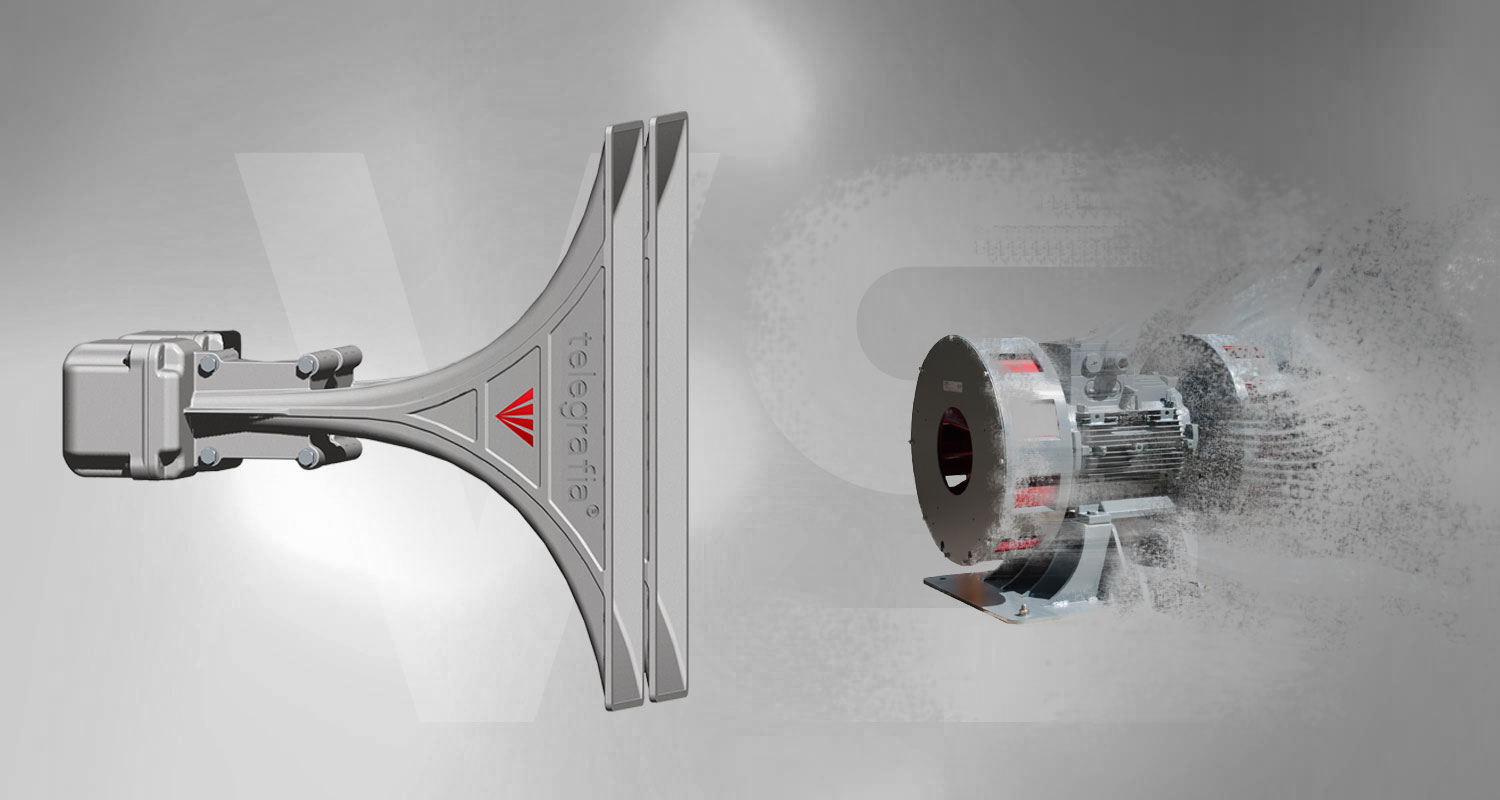
There are many valid reasons to upgrade an outdated warning system. However, decision-makers often hesitate when the benefits of change are not clearly understood.
In emergency situations, minutes or even seconds can make the difference between safety and disaster. Modern early warning systems enable faster response times and more effective communication, which directly translates into saved lives. Thanks to advanced electronic sirens and early warning systems developed by Telegrafia, millions of people worldwide can rely on receiving accurate and timely information when it matters most.
Although the installation of a new outdoor warning system represents a significant investment—both financially and logistically—it is essential to understand the limitations of traditional motor-driven sirens and why replacing them is a strategic and safety-critical decision.
Limitations of Motor-Driven Sirens
High Energy Consumption and Lack of Backup Power
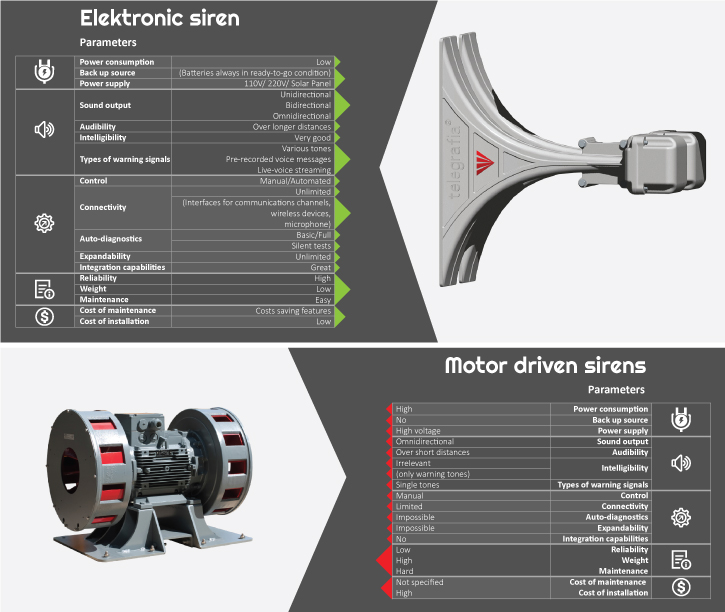
Traditional motor-driven sirens require a continuous power supply and consume a significant amount of energy. In contrast, modern electronic sirens operate with highly efficient electronics and integrated backup batteries, which are continuously recharged with minimal energy consumption.
During power outages—common in emergency situations—electronic sirens remain fully operational. Installing backup power solutions for motor-driven sirens is not only technically complex but also significantly more expensive.
Limited Sound Capabilities
Motor-driven sirens generate warning signals using an electric motor and a rotating siren head. As a result, they can produce only fixed or oscillating tones at specific frequencies, typically associated with traditional air-raid alarms.
Electronic sirens, on the other hand, can reproduce multiple standardized warning signals, broadcast live voice announcements, play pre-recorded messages, and deliver clear spoken instructions in real time. This capability allows authorities to communicate precise information to people in endangered areas, improving understanding, response, and overall safety.
Manual Operation and Lack of System Integration
Another major drawback of mechanical sirens is their lack of connectivity. They cannot communicate with computers, control centers, sensors, or other sirens, nor can they be remotely controlled or automated.
Electronic sirens are smart devices by design. They can be fully integrated into modern early warning systems and connected to control software, sensors, and communication networks, enabling automated activation and centralized management.
Benefits of Modern Electronic Sirens
By upgrading to electronic sirens, operators gain:
-
faster response times,
-
reliable operation during power failures,
-
clear and understandable communication,
-
remote control and automation,
-
seamless integration with modern warning infrastructures.
Beyond technical advantages, modern systems significantly reduce operational effort, save time, and—most importantly—help protect human lives.
Experience and Continuous Innovation
Keeping pace with rapidly evolving technology can be challenging, especially in the field of public safety. At Telegrafia, continuous innovation is driven by decades of experience and close cooperation with customers.
With more than 30 years of expertise, Telegrafia has developed fully programmable, fourth-generation electronic sirens that can be tailored to virtually any environment and project requirement. Each solution is designed to meet specific operational needs, ensuring reliability, flexibility, and long-term value.
Replacing outdated motor-driven sirens with modern electronic sirens is not merely a technological upgrade—it is a strategic investment in safety, efficiency, and resilience.

The article was written by
Monika Siserova
Monika is an international business manager for Balkan, Benelux and Scandinavian states. She worked with a diverse range of organisations, including government institutions, IGOs in the field of migration, private sector and non-profits. The mentioned experience laid a sound foundation for a challenging and meaningful job she has in the Telegrafia Company. Therefore, she is very excited about bringing you the latest news from the field of early warning and notification systems.